Hive Minds: New App Could Change How Institutions Care for Invertebrates
May 05, 2026
Author: Andrew Gogerty
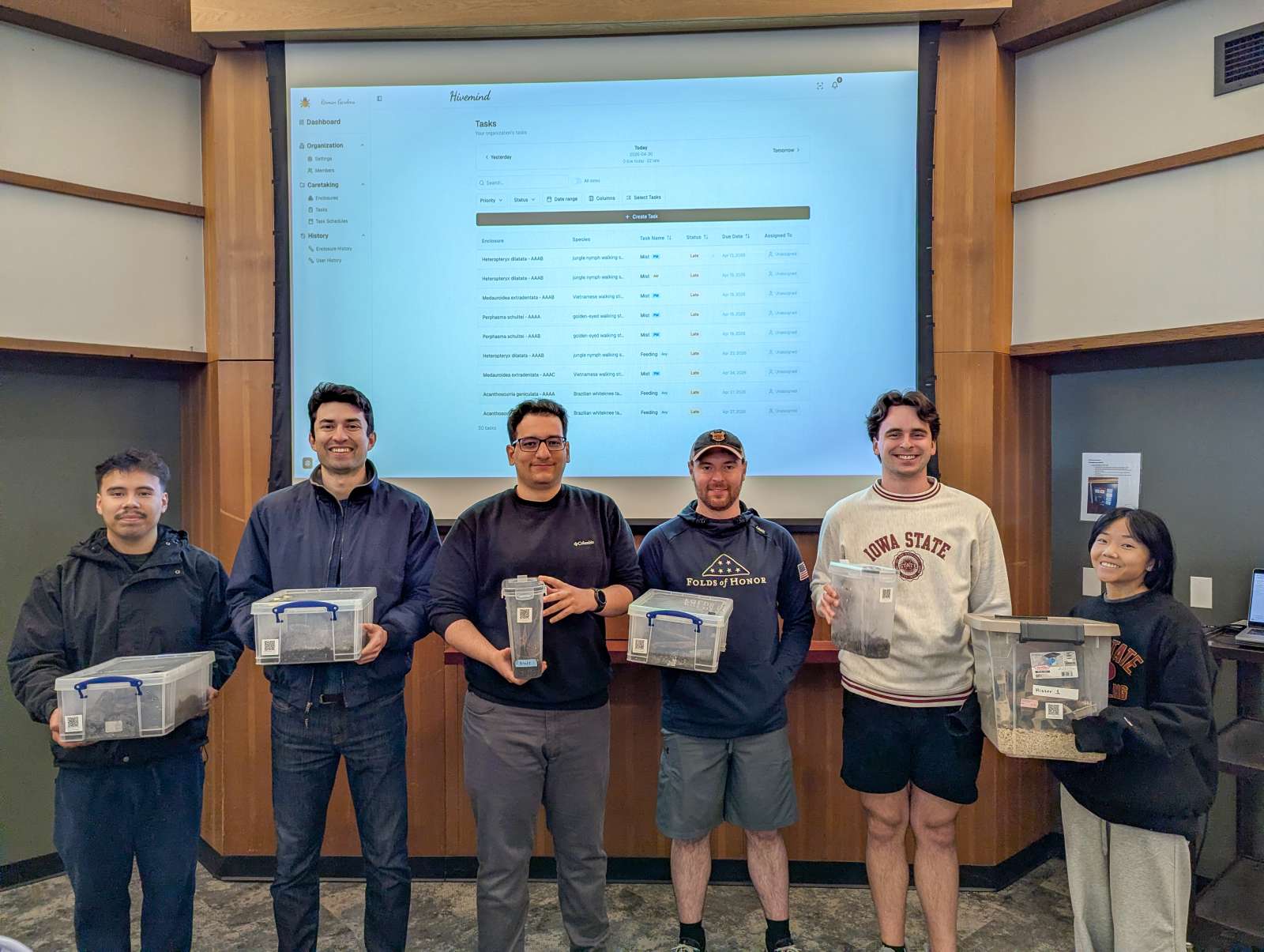
Left to right: Oscar Nazarit, Juan Figueroa, Omran Shareef, Carter Hauschildt, Lawson Port, Jaida Slife
By Andrew Gogerty
Ames, Iowa — A new digital tool being developed through a collaboration between Reiman Gardens and students at Iowa State University is poised to transform how zoos and educational institutions care for some of their smallest — and often overlooked —residents.
Dubbed “Hive Minds,” the project is the result of a yearlong senior capstone effort by a team of seven software engineering students in the Department of Electrical and Computer Engineering. Designed in partnership with Reiman Gardens’ entomology department, the application helps organizations track the daily care, health, and habits of invertebrates, from insects to arachnids.
“This is something that isn’t really out there right now,” said student team member Oscar Nazarit. “A lot of existing systems are built for larger animals. This fills a gap for smaller species.”
A Digital Upgrade for Invertebrate Care
Hive Minds is a web-based application that enables institutions to manage animal enclosures, assign tasks, and collect data in real time. Each enclosure is labeled with a QR code, enabling staff to quickly scan and access information such as feeding schedules, habitat conditions, and care logs.
Workers can update tasks directly through the app, creating a centralized, trackable system for daily operations — something that many institutions still manage on paper or basic spreadsheets.
“Even some of the largest zoos still rely heavily on handwritten records for day-to-day care,” said Nathan Brockman, director of entomology at Reiman Gardens. “This gives us a platform to not only track that care digitally but also generate meaningful data that could improve animal welfare globally.”
Built for Collaboration and Growth
The platform is designed to be scalable, allowing multiple organizations to use it and share standardized data. Reiman Gardens has already implemented QR codes across its invertebrate enclosures and is building out task systems for its species, with plans to expand usage to other institutions across the U.S. — and eventually worldwide.
The app will not be available to the general public through app stores. Instead, it will be distributed directly to zoos, gardens, and science centers, with additional visibility expected through presentations at professional conferences later this year and beyond.
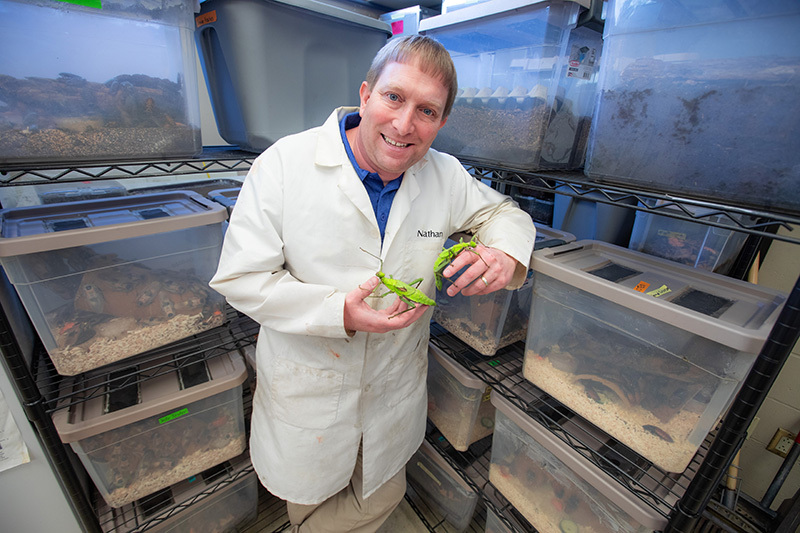
I'm excited that they were able to take this jumble of things in my brain and turn it into a real working application. We're getting a lot of great feedback from other institutions that are excited to use it as well.
Nathan Brockman, Reiman Gardens Director of Entomology
Real-World Impact for Students
For the students involved, Hive Minds represents more than just a class assignment. Unlike many academic projects, this one is already being used in a real-world setting.
“A lot of projects we’ve done are just for a grade and never get used again,” said team member Lawson Port. “This is something that people will interact with daily. It actually has impact.”
The project offered the type of real-world experience that university students crave, and it’s a big reason the students chose it for their capstone.
“You're working on a web app using several different types of technologies, and you also have to make it mobile friendly,” said Port. “So, a lot of that stood out to me because it's more relevant to what we want to be doing after graduation.”
Stepping Out of their Comfort Zone
The project also exposed students to a new domain — entomology — that many had little experience with before.
“It’s been a unique challenge,” said Omar Sharif. “Working with insects and learning how they’re cared for — it’s not something we’d normally encounter in software engineering.”
Some students even say their perception of insects has changed.
“I definitely appreciate them more now,” one student added. “I might not be so quick to get rid of a spider in my house anymore.”
Innovation in Action
The Hive Minds project aligns closely with Iowa State University’s broader emphasis on student innovation, combining modern web technologies, mobile-friendly design, and collaborative development tools to solve a problem.
By merging technology with biology, the project highlights how interdisciplinary partnerships can lead to meaningful advancements — even in areas as small as a spider’s enclosure.
As development continues, both Reiman Gardens and its student collaborators hope Hive Minds will become a standard tool for invertebrate care, improving both research capabilities and the day-to-day lives of the creatures it helps monitor.